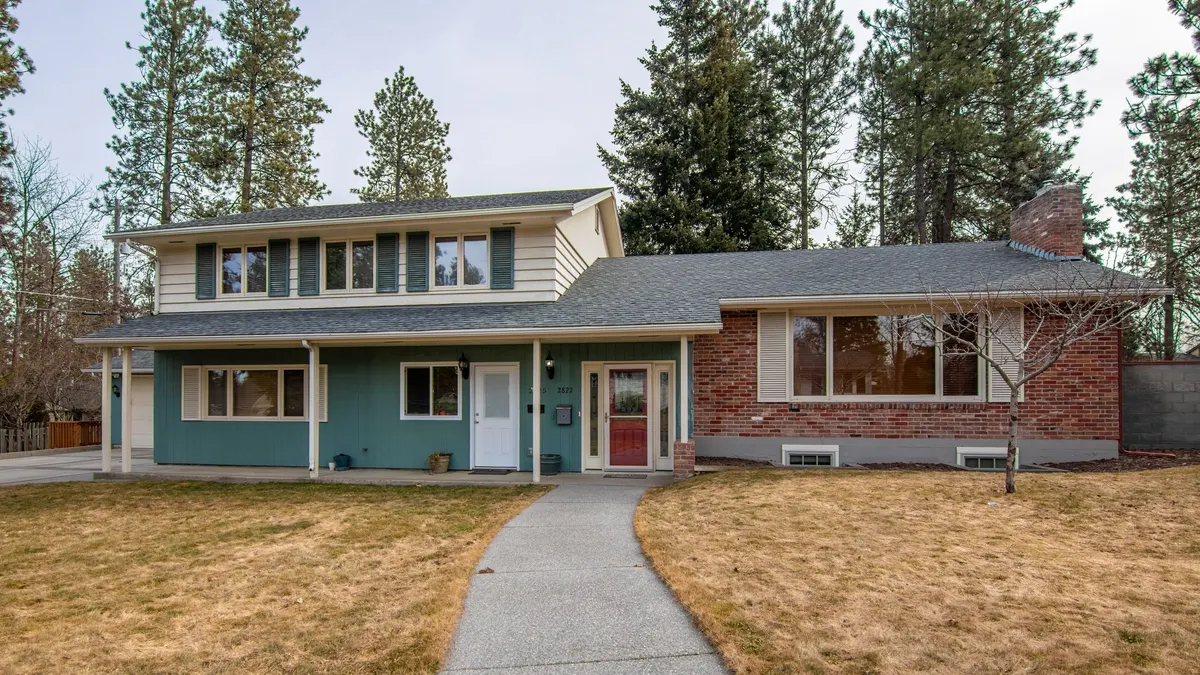
What is under Olathe
Olathe went from a county seat of 18,000 people in 1970 to a city of 145,000, and almost all of that growth was built on PVC sewer pipe. The subdivisions off 119th, 135th, 151st and Santa Fe from the 1980s onward have 4-inch SDR-35 laterals with solvent-welded or gasketed joints that do not open the way clay joints do. Roots are rare. Corrosion does not happen. When these lines back up, the cause is structural and specific, and it is almost never a full-line problem.
The exception is the original town: the grid around Santa Fe and Kansas Avenue, the streets east and west of downtown with 1890s to 1940s houses. Those are clay laterals under old trees, with the same joint and root problems as Kansas City's oldest neighborhoods, and the 1950s–60s ring around downtown adds cast iron under the slab.
PVC failures: bellies and crush points
A belly is a low spot where the pipe has sagged because the soil under it settled. Olathe's lots were mass-graded, trenches were cut into fill, and if the bedding under the pipe was not compacted, 20 years of water and freeze-thaw let it drop. Water and solids sit in the low spot, the pipe narrows with sludge, and the house backs up every few months. A cable clears it every time and it comes back every time. On camera it is unmistakable: the picture goes underwater for several feet. The fix is to dig the belly, re-bed the pipe on compacted gravel at the right grade, and reconnect. It is a spot repair, typically $1,500 to $4,000 depending on depth, not a replacement, and lining cannot fix it because a liner follows the sag.
The second failure is a crushed or punctured section, usually from a fence post, a deck pier, a mailbox post or an irrigation trench that hit the pipe years ago. The camera shows a flattened or broken spot at a specific footage; we locate it from the surface and it is a half-day repair.
The old grid: clay and roots
Downtown Olathe's clay laterals get the same treatment as Kansas City's: jet the roots, camera the line, and line it if it is round and continuous. Where a section has collapsed under a driveway, pipe bursting puts a new HDPE line in from two pits.
Jurisdiction and permits
The City of Olathe runs its own water and sewer utility for most of the city and issues plumbing permits through its building department; some newer annexed areas are served by Johnson County Wastewater. The lateral is the homeowner's to the main either way. We confirm which utility serves your address and pull the right permit. More on responsibility.
Response and pricing in Olathe
Average response to Olathe is about 60 minutes, 24/7, with same-day camera inspections for calls before noon. Spot repairs $1,200–$3,500 (deeper bellies to $4,000), lining $80–$200 per foot, excavation $50–$250 per foot; full ranges and a calculator on the cost page. If it is happening now, see the emergency page.
Permits and jurisdiction
Frequently asked questions
Why would a PVC sewer line in Olathe fail?
Settling. Olathe subdivisions were built fast on graded lots, and where the trench under the pipe was not compacted, the pipe develops a belly over 15 to 25 years. Crushed sections from later digging (fences, decks, irrigation) are the other common cause. Both are spot repairs rather than full replacements.
Does Olathe require a sewer repair permit?
Yes. The City of Olathe issues the plumbing permit and inspects lateral work in most of the city; some edges are served by Johnson County Wastewater. We handle the permit for your address.
Can you line a PVC sewer line?
Yes, but it is rarely the right answer for PVC, because PVC does not have the joint problems clay has. If the camera shows a belly, we dig and re-bed that section. If it shows one crushed spot, we replace that spot.